Well the first meeting was held in Bangor on Tuesday. I spoke with a reporter from channel 7 news and she played one quote from me asking how children would be protected when most Former SOs would be at jobs during the day when children where at school or the playground and not there a night where the RFSOs would be at home sleeping. Plus I was able to correct the reporters misinformation of a 60% recidivism rate. She used the the 3-5% rate found in most studies conducted by the US Department of Justice's own studies. So I think I had a least a small bit of influence with the one reporter.
Tonight I decided to see what I could find out about the woman who is pushing for this ordinance. Her name is Angela Hoy and she is a writer. She also has a blog here: http://vbac.angelahoy.com/. She is sadly misinformed and is pushing her hatred of RFSOs because two members of her family were molested. She would like to hear from people who have questions and read her blog. She can be written to at angela@writersweekly.com. I am planning on sending her an e-mail with correct information in it, especially the part about why anyone would oppose herordinance. So I encourage everyone who reads this to also write to her, nicely but firmly. There are further meetings on this proposal on August 10th at the next city council meeting. I also encourage you to write e-mails to the city couselors and to follow the e-mails with a letter.
Showing posts with label sex offender laws. Show all posts
Showing posts with label sex offender laws. Show all posts
Wednesday, July 14, 2010


Friday, February 26, 2010
Interesting Constitutional Question Raised by Crimal Justice Committe
These past few weeks I have attended several work sessions and listened to many others. The Justice Committee has been working on trying to bring Maine SORNA Registry into compliance with Maine's Constitution. In a recent case Maine's Supreme Court ruled that certain aspects of the SORNA Registry are unconstitutional, That it is in fact not a civil scheme but one that is punitive in nature and that people convicted between 1992 & 1999, who had to register as part of their sentence who then had time added to their registration requirements; when the laws were later changed, were in fact having their sentence added to. This is called ex post facto which means after the fact which both the State and our Nation's Constitution have said cannot be done to anyone for any reason. Also the Court ruled that the every 90 days in person registration at the local police station is punitive and must be changed. Janet Mills Maine's Attorney General gave the committee several options for dealing the these issues. The simplist one would be what they called a rolling registry which would mean that each person would have to comply with the laws in place at the time the offense was committed. Admittedly a logistical nightmare for the state but simplest and fairest solution of all. Bit it also would mean that many people would simply no longer have to register. Instead,what has evolved during their discussions with various experts is they plan expand the waiver program they implimented last year to include those from 1992 to 1999, previously the only people who could take advantage of this were people convicted between 1982 to 1992, those who had the registry imposed on them when they changed the laws in 2005 and made them retroactive to include people all the way back to 1082. This is a simple plan that only allows people who quailify to apply and it is either granted or denied with no room to apeal the decision. They would then add a second step that is more involved, you would get a hearing in front of a judge and could present evidence showing that you are no longer a risk to society. At this stage they are debating the wording and what would be exceptible to show your risk level. This will they hope get them off the hook with the Court and keep the most people on the registry. Never mind the fact that the people we are talking about have served their time and been living in society trying to live an offense free life for 10 to 20 years.
The thing that has come up that bothers me the most is they have decided to exclude anyone who has an out of state conviction. In other words if you are a current resident of Maine no matter how long you have lived here you could not take advantage of either oppurtunity they are considering. Why is this? How can they have two different classes of people? Does the State's Constitution only apply to people who committed their offense here in Maine but not to those who made a mistake outside of Maine but is now a resident? Well I think I can answer why they are trying to do this whether or not it is Constitutional or not. From the very first work session the state was made " We don't want Maine to become a "HAVEN STATE". They are fearful that if word gets out that Maine has easier registry requirements that hoards of former offenders will flock to Maine looking to get off the registry. If they are so fearful of this happeneing why not place some kind of residence rerequirement. Such as former offenders must live in Maine for a certain length of time, for instance say after living here for at least 5 years and if you are eligable according to all other requirements before you could apply. Instead they are trying to interpet the Constituion two different ways.
I wonder how many people are even concerned with this or are even bothered in any way? Does anyone realize that one the Constitution can be twisted to suit different agendas that their rights are in danger as well. There is a reason the statue outside courts are shown as blind, it is that justice should be blind it must apply to those we dislike as well as those we like, or we all stand to lose in the long run. What will it take to get people to notice? Once we have lost our rights it is too late to get them back again.
The thing that has come up that bothers me the most is they have decided to exclude anyone who has an out of state conviction. In other words if you are a current resident of Maine no matter how long you have lived here you could not take advantage of either oppurtunity they are considering. Why is this? How can they have two different classes of people? Does the State's Constitution only apply to people who committed their offense here in Maine but not to those who made a mistake outside of Maine but is now a resident? Well I think I can answer why they are trying to do this whether or not it is Constitutional or not. From the very first work session the state was made " We don't want Maine to become a "HAVEN STATE". They are fearful that if word gets out that Maine has easier registry requirements that hoards of former offenders will flock to Maine looking to get off the registry. If they are so fearful of this happeneing why not place some kind of residence rerequirement. Such as former offenders must live in Maine for a certain length of time, for instance say after living here for at least 5 years and if you are eligable according to all other requirements before you could apply. Instead they are trying to interpet the Constituion two different ways.
I wonder how many people are even concerned with this or are even bothered in any way? Does anyone realize that one the Constitution can be twisted to suit different agendas that their rights are in danger as well. There is a reason the statue outside courts are shown as blind, it is that justice should be blind it must apply to those we dislike as well as those we like, or we all stand to lose in the long run. What will it take to get people to notice? Once we have lost our rights it is too late to get them back again.
Sunday, January 24, 2010
Schedule for the Upcoming Week
Note that the sessions we are concerned with are on Tuesday and Thursday @ 1pm. It is so important for us to show up at everyone of these public sessions. I will be there as oten as I can.
Tuesday, November 10, 2009
Good News Concerning Upcoming Legistative Bills
Well I meant to post this a couple of weeks ago. The review committee has rejected all 5 of the bills that were introduced for this session. There is some rumblings that there maybe a committee formed that is going to review all bills that weren't accepted, so we still may have to fight one or more bills this session. And we also need to keep an eye out for emergency bills being introduced that concern changes to Sex Offender laws. But for now things seem to be quiet.
Monday, October 12, 2009
Upcoming Bills effecting Maine RFSOs
Ok all this is what we are facing so far during the next Legislative Session that starts in January. Can anyone tell me what constitutes a Class D sex offense here in Maine? (see LR: 2383) Three of the proposed bills deal with changing the 750 foot residency restriction limit passed last session. Notice the first two would add Day Care Facilities to the places limiting where you can live as an RFSO . And the last one who is going to vote against little old ladies being raped in the nursing home? But my thought is why are they trying to add a new category, when I am pretty sure these are already sex offenses. It will be interesting to see the full bills and how they are worded.
Bills Being Requested as of yesterday.
LR: 2189: An act to Limit the Distance from a Day Care Facility within Which a Registered Sex Offender May Reside
LR: 2142: An Act to Increase the Maximum Distance from a School and a Day Care Center That May Be Set by Municipal Ordinance beyond Which a Sex Offender May Reside
LR: 2180: An Act To Provide to Certain Municipalities a Waiver of the Requirement To Adopt a Comprehensive Plan and Allow Those Municipalities To Enforce Their Ordinances
LR: 2383: An Act To Provide Full Accountability for Convicted Class D Sex Offenders
LR: 2105: An Act To Require Persons Who Commit Sex Offenses Against Dependent or Incapacitated Adults To Register under the Sex Offender Registration and Notification Act of 1999
Maine Citizens For Change
http://mecfc.blogspot.com
Bills Being Requested as of yesterday.
LR: 2189: An act to Limit the Distance from a Day Care Facility within Which a Registered Sex Offender May Reside
LR: 2142: An Act to Increase the Maximum Distance from a School and a Day Care Center That May Be Set by Municipal Ordinance beyond Which a Sex Offender May Reside
LR: 2180: An Act To Provide to Certain Municipalities a Waiver of the Requirement To Adopt a Comprehensive Plan and Allow Those Municipalities To Enforce Their Ordinances
LR: 2383: An Act To Provide Full Accountability for Convicted Class D Sex Offenders
LR: 2105: An Act To Require Persons Who Commit Sex Offenses Against Dependent or Incapacitated Adults To Register under the Sex Offender Registration and Notification Act of 1999
Citizens for Change-Maine
Po Box 611
Bridgton, ME 04009
State CoordinatorPo Box 611
Bridgton, ME 04009
Maine Citizens For Change
http://mecfc.blogspot.com
Monday, October 5, 2009
When Adults Fail Children—For Life
Brody's Scribbles... A Guest Editorial from Dr. Marty Klein
article linkWhen Adults Fail Children—For Life
 By Dr. Marty Klein
The Iowa Supreme Court has affirmed the conviction of 18-year-old Jorge Canal, who complied with a 14-year-old friend’s request for a photo of his penis. The young man is now forced to register as a sex offender, meaning his chances of getting a college degree, job, or livable apartment are pretty much ended.
According to the court, the girl “generally hung out with teenagers older than herself;” was “only friends” with Canal; thought the picture was sent “only as a joke;” and was not “a means to excite any feelings.” Nevertheless, Canal was convicted of “knowingly disseminating obscene material to a minor.”
Canal was a foolish kid. But there are many ugly, stupid, irresponsible adults in this story. The girl’s mother, who checked her daughter’s e-mail and internet use, found the photo and forwarded it to her husband. The father then showed the photo to his friend, a police officer. The cop arranged to have Canal arrested. A prosecutor pursued the case, a judge tried it, a jury convicted. These adults failed Canal and his friend miserably. His ruined life will be a testament to their fear, insecurity, and hatred.
All these adults were supposedly attempting to protect Iowa’s young people–by punishing this kid who was fooling around with a pal.
So let’s spend a moment in the real world (which none of these adults seem to inhabit). Which is likely to hurt this 14-year-old girl more—seeing a 2-square-inch photo of a friend’s erect penis, or being the reason that this friend will spend time in jail and decades as a registered sex offender? Her life is now ruined (in addition, of course, to his), because of her criminally negligent parents, criminally ambitious prosecutor, and 12 jury members who failed to protect people who needed justice but received only wrath.
Americans should understand the horrors of our obscenity laws: a picture or word or object is obscene only after a jury decides that it is. And a jury can decide that ANY picture, word, or object is obscene. So no one can know for sure what’s obscene until it’s too late. This is exactly like laws against “hooliganism” in places like Russia that we rightly deride.
The judge in Canal’s case had rightly told the jury that “a depiction of a person’s genitals was not in and of itself obscene. In order for the depiction of a person’s genitals to be obscene, an average person applying contemporary community standards with respect to what is suitable material for minors must find the material is patently offensive, appeals to the prurient interest, and lacks serious literary, scientific, political, or artistic value.” At that point, the picture becomes illegal, and sharing it with someone else becomes a crime.
A jury of twelve Americans destroyed Jorge Canal’s life because they believed that a picture of his erect penis is “patently offensive.” I hope each of them never gets a good night’s sleep for the rest of their lives.
Dr. Marty Klein has been a Licensed Marriage & Family Therapist and Certified Sex Therapist for 29 years. As a clinician, he works each week with couples and individuals who have a variety of sexual and non-sexual difficulties--over 30,000 sessions since 1980.
Dr. Klein fights for the sexual rights of all Americans through his legal and courtroom work. He has been an expert witness, consultant, or invited defendant in many state and federal censorship, internet, and obscenity cases.
He has authored over 100 articles in publications such as Parents, New Woman, and Playboy, as well as San Francisco Medicine, the California Therapist, and the Journal of Homosexuality. He is also a former contributing editor to The New Physician, American Baby, and Modern Bride.
Thursday, September 10, 2009
CFC Maine mentioned in article
State law set to change city's sex offender ordinance
http://www.keepmecurrent.com/american_journal/news/article_e2946838-9e46-11de-8b21-001cc4c002e0.htmlPlease feel free to leave comments
Westbrook police Detective Dan Violette says there's a reason the number of sex offenders living and working in the city hasn't changed much in the past two years.
Since the City Council adopted one of the strictest ordinances in the state prohibiting registered sex offenders from living or working in most of the city, Violette has had to force people out of their new apartments and make them quit their jobs.
According to the detective, who said he spends about 25 percent of his work week keeping track of sex offenders in the city, about 37 registered sex offenders live in Westbrook and an additional 16 work there.
"The number hasn't fluctuated very much," Violette said.
But that could change when a new state law goes into effect Saturday, nullifying Westbrook's ordinance.
The City Council will vote Monday on whether to adopt the state's new maximum allowable restrictions on where sex offenders can live. If passed, the 2,500-foot buffer zones around all places children frequent will be replaced with 750-foot restricted areas just around schools. And that only covers residency. The state law says that towns and cities cannot restrict where sex offenders can work.
In a gesture showing their disapproval of the state law, Gorham town councilors last week refused to change the town's restrictive ordinance in order to comply. However, it's still in question what the town's police department will be able to enforce once the law goes into effect.
Though Violette said he'll still spend the same amount of time monitoring sex offenders in the city and notifying neighbors and employers of their whereabouts, the state law takes away some of his authority over sex offenders and a safeguard for Westbrook children.
"It's given me more tools to help make sure sex offenders were in compliance," he said about the old law.
DRAWN TO WESTBROOK
There are no demographics that encompass all sex offenders, Violette said, but because a lot of employers don't want to hire registered sex offenders, many, regardless of their backgrounds and skills, don't have steady sources of income.
"You're a convicted felon. That makes you ineligible to work in a lot of places," Violette said.
Because of that, he believes the amount of low-income housing in Westbrook draws more sex offenders. Though Portland is probably the most attractive city in the area for jobless sex offenders because of its shelters and support services, he said, "we're ripe for the picking as far as increasing our numbers."
However, some say that keeping people out of jobs and homes because of their sex offender status is unconstitutional.
Jane Cantral, who runs Maine Citizens for Change - a local affiliate of the national group Reform Sex Offender Laws - said she and her boyfriend Calvin Shelton, a registered sex offender, didn't have an easy time finding a home in this area of the state.
"We're trying to buy a house and we're looking at maps," said Cantral, a Bridgton resident who was herself the victim of a sex offender.
"It sounds good as a knee-jerk reaction, but if you really thought about it, how much sense does it make?" Cantral said.
She pointed to the fact that students are not in school at night, when most sex offenders are in their homes. She also noted that kids are better looked after in schools and day cares than they are the rest of the day.
"I don't think residency restrictions are needed at all," she said.
Cantral hopes that more efforts will be made on educating parents and children and treating sex offenders rather than on making local or state laws that she believes are ineffective.
IS LESS MORE?
But success is measured in different ways when it comes to sex offender laws.
Violette said he scans the state's sex offender registry about once a week to see if there are any new registered sex offenders living or working in Westbrook. During the past two years, he said, he's had to ask about a dozen people to leave their jobs, usually because of their proximity to day cares. Though he's gotten mixed reactions from employers - some thank Violette for making them aware of the charges, others would rather to keep the workers regardless of them - the sex offenders themselves tend to comply quickly.
"Almost every time, they quit right way," he said.
Other than the case of one registered sex offender Violette had to repeatedly chase out of a Spring Street apartment, he said the same willingness to obey the ordinance was true of sex offenders trying to move to the city. He said he's had to turn down about five or six sex offenders who tried to move into restricted areas of the city from out of town and another half-dozen who wanted to move within Westbrook.
Overall, Violette estimated that about 20 additional sex offenders would be living or working in the city today if it weren't for the ordinance.
"It was working," he said.
PEACE OF MIND
One woman who was an outspoken advocate of the Westbrook ordinance when it was adopted said she plans to speak up again at the council meeting Monday.
Jen Wescott, who has two family members that were sex crime victims, said even with the ordinance in place, as a mother and a day care owner, she's on constant alert, keeping an eye on who's around. The city's law offered extra protection.
"It gives you a little more sense of security," Wescott said.
But creating a false sense of security is one of the arguments opponents have against residency restrictions.
"They have a tendency to drive offenders underground," Sen. Anne Haskell, D-Portland, who sponsored the bill, said in June, when the law was passed. "Then you don't know where they are, which is a more dangerous situation."
Those who support less-stringent residency resrictions say the vast majority of sex crimes are committed by people known to the victims - which was the case with Wescott's family members and with Cantral, as well.
While Cantral argues that over-reaching restrictions violate the rights of former criminals who have paid their debts to society, Wescott and Violette both believe that additional protection against sex offenders can only help to keep kids safer.
"Any buffer you put between a sex offender and our vulnerable children, I think that's a good thing," Violette said.
Sunday, September 6, 2009
CFC Maine Meets
We are having our first planning session for CFC Maine next Saturday September 12th at 10:30am in Gorham. We will be discussing and setting forth our goals for the upcoming year. If I haven't contacted you about this meeting yet please consider attending. We want everyone interested in promoting change to RFSO laws to join us. RFSOs, family members and the general public are all invited. There are many jobs that can be done without being in the public eye. We need to plan the best way we can exploit the current climate asking how things should change to prevent more crimes like the recent one with Kaycee. Email me at ladyfurebear@yahoo.com if you want more information. Hope to see you there.
One of many articles pointing out RFSO laws don't work....
America's flawed sex offender laws
The Jaycee Dugard case illustrates how America's sex offender registries hurt efforts to stop repeat sex crimes
http://www.guardian.co.uk/commentisfree/cifamerica/2009/sep/05/jaycee-lee-dugard-sex-offender-laws
Americans have been doing some soul-searching about our approach to monitoring convicted sex offenders since the recent discovery of Jaycee Lee Dugard. Dugard was kidnapped in California at age 11 and held captive for 18 years in Phillip Garrido's garden. He managed to hide his secret prisoner from the police even though he was a convicted rapist and his name appeared on the public sex offender registry.
In the past, news of a horrific crime committed by a convicted sex offender inevitably led to widespread calls for increasing the scope of sex offender registration and community notification laws. Over the past 15 years, the US has expanded its registration and notification schemes to include an estimated 674,000 convicted sex offenders. Some remain on the public list for the rest of their lives, regardless of the seriousness of their offence, the current threat they might pose or their progress toward rehabilitation . The effectiveness of such laws has rarely been questioned, and they enjoy widespread public support.
But this time around, there has been a different type of discussion. Rather than just calling for tougher sex offender monitoring laws, Americans are openly wondering if a new approach is needed to deal with convicted sex offenders who have re-entered the community.
Although Garrido's case is extraordinary, it illustrates the flaws in America's sex offender registration and community notification schemes. Experts in sexual violence say that placing all convicted sex offenders on a registry for life may do more harm than good. The public nature of the registry makes it nearly impossible for convicted sex offenders to re-enter the community with the kind of support system they need to reduce their likelihood of committing another offence. Low-level offenders who pose little risk to the community are monitored in the same way as high-risk offenders, diluting police resources to concentrate on those, such as Garrido, who pose a high risk of committing another offence.
Furthermore, focusing so much public attention and resources on convicted sex offenders ignores the reality of sexual violence in the United States. It is estimated that 87% of new sex crimes every year are committed by individuals without a prior sex crime conviction. And very few sex crimes move through the system – less than one-third of all reported rapes result in an arrest.
So pouring scarce resources into monitoring all convicted offenders means there is less money for programmes to prevent sexual violence and counsel victims and for the rape investigation units, rape evidence testing and other tools that could bring justice in these cases.
Because of such concerns, Human Rights Watch called in a 2007 report for a major revamping of America's sex offender laws. Registration should be limited to former offenders who have been individually assessed as dangerous, and only for as long as they pose a significant risk. Community notification should be restricted to those who genuinely can benefit from knowledge about dangerous former offenders in their midst.
Sex offender registration and community notification laws didn't cause Garrido's crimes, but they didn't help the police stop them, either. While Americans are starting to question the value of our extensive sex offender monitoring system, it remains to be seen whether these doubts will lead to real reform.
Once sex offender laws are in place, it is hard for politicians to repeal them, because they don't want to appear weak on the issue of sex offenders. If Britain wants to do more to prevent sexual violence, it should keep its sex offender registry narrowly focused, and use the savings in time, energy and resources to implement sexual violence prevention policies that will actually keep the public safe.
The Jaycee Dugard case illustrates how America's sex offender registries hurt efforts to stop repeat sex crimes
http://www.guardian.co.uk/commentisfree/cifamerica/2009/sep/05/jaycee-lee-dugard-sex-offender-laws
Americans have been doing some soul-searching about our approach to monitoring convicted sex offenders since the recent discovery of Jaycee Lee Dugard. Dugard was kidnapped in California at age 11 and held captive for 18 years in Phillip Garrido's garden. He managed to hide his secret prisoner from the police even though he was a convicted rapist and his name appeared on the public sex offender registry.
In the past, news of a horrific crime committed by a convicted sex offender inevitably led to widespread calls for increasing the scope of sex offender registration and community notification laws. Over the past 15 years, the US has expanded its registration and notification schemes to include an estimated 674,000 convicted sex offenders. Some remain on the public list for the rest of their lives, regardless of the seriousness of their offence, the current threat they might pose or their progress toward rehabilitation . The effectiveness of such laws has rarely been questioned, and they enjoy widespread public support.
But this time around, there has been a different type of discussion. Rather than just calling for tougher sex offender monitoring laws, Americans are openly wondering if a new approach is needed to deal with convicted sex offenders who have re-entered the community.
Although Garrido's case is extraordinary, it illustrates the flaws in America's sex offender registration and community notification schemes. Experts in sexual violence say that placing all convicted sex offenders on a registry for life may do more harm than good. The public nature of the registry makes it nearly impossible for convicted sex offenders to re-enter the community with the kind of support system they need to reduce their likelihood of committing another offence. Low-level offenders who pose little risk to the community are monitored in the same way as high-risk offenders, diluting police resources to concentrate on those, such as Garrido, who pose a high risk of committing another offence.
Furthermore, focusing so much public attention and resources on convicted sex offenders ignores the reality of sexual violence in the United States. It is estimated that 87% of new sex crimes every year are committed by individuals without a prior sex crime conviction. And very few sex crimes move through the system – less than one-third of all reported rapes result in an arrest.
So pouring scarce resources into monitoring all convicted offenders means there is less money for programmes to prevent sexual violence and counsel victims and for the rape investigation units, rape evidence testing and other tools that could bring justice in these cases.
Because of such concerns, Human Rights Watch called in a 2007 report for a major revamping of America's sex offender laws. Registration should be limited to former offenders who have been individually assessed as dangerous, and only for as long as they pose a significant risk. Community notification should be restricted to those who genuinely can benefit from knowledge about dangerous former offenders in their midst.
Sex offender registration and community notification laws didn't cause Garrido's crimes, but they didn't help the police stop them, either. While Americans are starting to question the value of our extensive sex offender monitoring system, it remains to be seen whether these doubts will lead to real reform.
Once sex offender laws are in place, it is hard for politicians to repeal them, because they don't want to appear weak on the issue of sex offenders. If Britain wants to do more to prevent sexual violence, it should keep its sex offender registry narrowly focused, and use the savings in time, energy and resources to implement sexual violence prevention policies that will actually keep the public safe.
Wednesday, August 5, 2009
Warning for Parents! CRIMINALIZATION OF CHILDHOOD SEXUALITY
All parents need to read this and be aware of what is going on in our communities. I found this on the website Ethical Treatment For All Youths. A must read for all of with children in our lives.
CRIMINALIZATION OF CHILDHOOD SEXUALITY
Article by Dr. Marshall Burns Link
As previously shown, the language used to label children who behave in a sexual manner typically confuses indecent or socially inappropriate behavior with coercion and violence.4 It is one thing to prohibit such behavior and discipline children for it. It is quite another to describe almost any sexual activity among children, even when it is mutually desired, as “molestation,” “abuse,” “assault,” and “rape.” Such language is a slap in the face to those children who have been truly victimized by real abuse. It also misleads the public into thinking that all children who act sexually are dangerous and merit criminal charges.
Prosecution of children
A recent sexual abuse conference defined “limited exploratory behaviors committed primarily out of curiosity” by juveniles as “deviant sexual behavior.” It referred to these children as “young sex offenders,” adding that “society needs interventions to respond effectively...focusing on protecting the community...”
One article in a professional journal says:
While filing, criminal prosecution, and involvement of the criminal justice system may not be considered necessary for some of these child perpetrators, it should at least be considered. Not only does this type of intervention demonstrate to the girls the seriousness of their sexually abusive behavior, but it also makes their parents take heed of the behavior...The parents of these children also need to be mandated to treatment.3
The criminal justice system follows suit.
-
”Even children under age 12 are prosecuted for rape first degree and sodomy first degree for sexual conduct with each other. Furthermore, it is not uncommon for a 13 year old who has sexual contact with an 11 year old to be prosecuted for a class A felony...A youthful offender convicted of rape or sodomy in the first degree is a "violent offender" who must serve at least 85% of his sentence before he can be paroled...Youthful offenders are subject to "Megan's Law" requirements.”
--Attorney Gail Robinson -
”Their names, addresses, and pictures are all on-line, on the state's Sexual Offender's page. Seemingly, they are pre-pubescent predators, but juvenile probation officer Richard Garcia says, 'We got kids on probation for doing stuff that all of us did at one time or another'...it can end with a child labeled as a deviant, stuck with the stigma through their adult years...81% of San Antonio adults say all sex offenders, regardless of age, should be registered, and their information should be public.”
--WOAI-TV -
“A ten-year-old kid plays doctor with his kid sister. A senior in high school has consensual sex with his sophomore girlfriend. Dangerous sex offenders? Yes, say the nation's toughest sex laws. And some states' punishments include posting the juvenile offenders' pictures on websites for the rest of their lives.”
--Journalist Seamus McGraw, runner-up for the 2002 Casey Medal
Some jurisdictions believe that all childhood sexual activity warrants criminal investigation.
-
“Kansas can require health care professionals to report all suspected underage sexual activity...”
--Lawrence Journal-World, Lawrence, Kansas -
“The agency is required by law to investigate all episodes of sexual contact between children...“
-- The Reporter, Fon du Lac, Wisconsin
According to the research on child sexual behavior, authorities may have to place 20% to 50% of all children in their jurisdictions under investigation.
Prosecution of teenagers
Teenage sexual behavior is not seen as a disorder to the extent that prepubescent behavior is. Nevertheless, it is not unusual for teens to be prosecuted for non-coerced sexual behavior and labeled as sex offenders.
In its brochure for teenagers, one state's attorney general's office issues the following warning (bold in the original):
Even if you are a minor, if you have consensual sexual contact with someone under the age of 15, you can be charged with gross sexual imposition in juvenile court. If your case then is transferred to adult court, you will be treated as an adult sex offender and will be subject to the same penalties as an adult. The law does not make an exception for you because you are in love..."Second base" can get you arrested! Although it may seem harmless to you, you can be charged with a sex offense!...Even if your boyfriend or girlfriend wants to have sex with you, your friend's parents can still have you arrested if they find out.
In addition to behavior that is abusive, the brochure lists the following as crimes: consensual sexual contact, fondling, and fornication. It describes the following possible penalties: imprisonment of up to 20 years, fines of up to $10,000, registration as a sex offender, and notification to police when moving for the rest of one's life.
In two separate incidents in Wisconsin, both young teenagers in sexual relationships were recently charged with sexually assaulting each other.
-
According to police, a 14-year-old city of Pewaukee boy and a 13-year-old village of Pewaukee girl allegedly engaged in sexual activity in a residence...Police are seeking to charge both with second-degree sexual assault.
--Lake Country Reporter -
...authorities say their prosecution is meant to help...The boy is being held in secure detention on a charge of attempted second-degree sexual assault...The girl pleaded guilty to fourth degree sexual assault.
--Milwaukee Journal Sentinel
Parents have a right to teach their children their moral values regarding sex, but police knowingly labeling non-violent mutually desired behavior as assault is dishonest and purposely misleading, and makes a mockery of true assault. Lying to the public about young people's behavior and treating them like criminals on the pretense of helping them can ruin lives, and has no place in a democracy.
-
Gorcyca had overreacted by bringing criminal charges for what amounted to consensual sex between promiscuous teenagers...all four defendants were notified they'd be registered as sex offenders...Justin Fawcett of West Bloomfield, was particularly devastated...Friday night, his parents found him dead of an apparent overdose...the criminalization of teenage promiscuity is destroying young lives. And if you're a parent, wake up. Because if you think this couldn't happen to your teenager, you've missed the whole point of Justin Fawcett's story.
--Detroit Free Press
See also: “In Memory of Justin M. Fawcett,” Citizens for Second Chances
The U.S. Department of Justice relies on states to identify juvenile sex offenders, defining as “sexual assault” any sexual activity done “not forcibly or against that person's will where the victim is incapable of giving consent because of his/her youth.” Such definitions were originally intended to protect children and teenagers from exploitation by adults. However, they are now applied even when the supposed offender is too young to give consent. The Department notes that virtually all offenses by juveniles involve family members and acquaintances, confirming that many may be incidents of sex play among siblings or friends, or sexual activity within romantic relationships.6 So it is not surprising that statistics would seem to show that our society is being overwhelmed by violent, sex-crazed children and adolescents.
-
One expert writes that “at least a half-million juveniles commit a hands-on sex crime every year.” 7
-
Another claims that 1 out of every 20 boys is or will be a child molester.1
-
Both the American Academy of Child and Adolescent Psychiatry and the Center for Sex Offender Management state that one-third to one-half of all child molestation is committed by children themselves.2,5
-
The U.S. Department of Justice finds that of all ages 7 - 60, “the single age with the greatest number of offenders from the perspective of law enforcement was age 14.” 6
No one doubts that coercive behavior should be prohibited, but one cannot know what fraction of these statistics involve non-coerced behavior. This may explain the confused attempts to understand juvenile offenders shown below, and why criminal sexual behavior seems most often to begin between ages 6 and 9:
O'Brien and Bera defined seven categories of juvenile sex offenders: naive experimenters, undersocialized child exploiters, sexual aggressives, sexual compulsives, disturbed impulsives, group influenced, and pseudosocialized. Graves suggested three typologies: pedophilic, sexual assault, and undifferentiated. Prentky et al. used six categories: child molesters, rapists, sexually reactive children, fondlers, paraphilic offenders, and unclassifiable. Weinrott suggested four general types: juvenile delinquents in general, those who have deviant arousal, those who are psychopathic offenders, and those who fit none of these categories...In a study of 127 children ages 6-12 who had evidenced sexual behavior problems, Pithers et al. identified five subtypes: sexually aggressive, nonsymptomatic, highly traumatized, abusive reactive, and rule breaker. Recent surveys suggest an increase in the rate of preadolescent children who evidence sexually abusive behaviors. Available studies have reported sexual aggression in children as young as 3 and 4; the most common age of onset appears to be between 6 and 9...Victims of preadolescents...typically were siblings, friends, or acquaintances.
--U.S. Office of Juvenile Justice
A rational approach
All of this is not to imply that sexual aggression, indecency, or behavior among children of different ages is acceptable. However, labeling children as sexually deviant—essentially criminally ill—is not the best way to teach them proper behavior.
A better approach would seem to be for parents to teach their children proper sexual behavior in the same way they teach them proper non-sexual behavior—by conveying to them their values, explaining why socially inappropriate behavior offends others, and using appropriate discipline when necessary. Treatment should be sought only when behavior is truly violent or a sign of a scientifically established disorder.
Unfortunately, not only is this not the case, but an array of extreme, scientifically unsupported, and potentially damaging diagnostic and treatment methods are used that are disturbingly reminiscent of the approaches used with homosexuals 50 years ago.
Tuesday, July 28, 2009
Cartoon States the Obvious Reason for RFSO Laws

Monday, July 20, 2009
Atlanta Teen Killed in Daytona Beach, Vigilantes Kill 13 Year old
Those of us in Maine remember Chief Chitwood. He was always outspoken, love him or hate him he always called it like he saw it. Here a 13 year old boy is tragically murdered and he speaks out and links the murder with the boy's father status as a Registered Sex Offender. Cudos to Chief Chitwood for being brave enough to call a spade a spade and not let the powers that be sweep this terrible tragedy under the rug of 'mistaken identity'. I hope he pursues these criminals and brings their cowardly actions to trial.
All of this is another unintended consequence of the Registry. The registry is supposed to be about protecting children isn't it? Well what about this child? Wasn't his life worth protecting? Who protects the families of Former Sex Offenders? Did this child, whose only crime was that his father committed a sex offense not deserve to live a long peaceful life free of harassment? Or do we just chalk this young life up to 'collateral damage'? The Registry is a call to the crazies and self-righteous, a call to take the law into their own hands. To many the only good Former Sex Offender is a dead one. It doesn't matter what actually happened, that a person was judged in a court of law, given a sentence, did their time and abided by all other terms and conditions placed on them. Now they have a life long brand placed on their lives and the lives of anyone that loves them, rents a house to them or employs them. One that gives them no hope of reprieve no matter how much time has past. One that gives vigilantes a legitimate target for their hatred. They no longer can hate Jews, blacks, gays or even handicapped people so now our Government has declared it's open season on Former Sex Offenders.
Read this article here it talks about the use of the registry by vigilantes.
Atlanta Teen Killed in
Daytona Beach
Article here
All of this is another unintended consequence of the Registry. The registry is supposed to be about protecting children isn't it? Well what about this child? Wasn't his life worth protecting? Who protects the families of Former Sex Offenders? Did this child, whose only crime was that his father committed a sex offense not deserve to live a long peaceful life free of harassment? Or do we just chalk this young life up to 'collateral damage'? The Registry is a call to the crazies and self-righteous, a call to take the law into their own hands. To many the only good Former Sex Offender is a dead one. It doesn't matter what actually happened, that a person was judged in a court of law, given a sentence, did their time and abided by all other terms and conditions placed on them. Now they have a life long brand placed on their lives and the lives of anyone that loves them, rents a house to them or employs them. One that gives them no hope of reprieve no matter how much time has past. One that gives vigilantes a legitimate target for their hatred. They no longer can hate Jews, blacks, gays or even handicapped people so now our Government has declared it's open season on Former Sex Offenders.
Read this article here it talks about the use of the registry by vigilantes.
Atlanta Teen Killed in
Daytona Beach
Article here
Updated: Monday, 20 Jul 2009, 7:19 PM EDT
Published : Monday, 20 Jul 2009, 6:00 PM EDT
ATLANTA (MyFOX ATLANTA) - A 13-year-old from Atlanta was murdered while visiting family in Florida. Police said the boy was shot in the face early Monday morning by someone lurking around his family's home.
Thirteen-year-old Lloyd Robinson, Jr. had just finished 7th grade and was spending the summer with his dad before heading back to school.
"It's just a total period of pain for me and I wish this on nobody. I fear burying my kids and I am making funeral arrangements for my son and I shouldn't be," said the teen's father, Lloyd Robinson, Sr.
Daytona Beach police said there was a knock on the door at the Robinson's home just after 4:00 a.m. A woman asked for someone who wasn't there and the teen's father told the woman to go around to the glass door. When Robinson, Sr. tired to open the door a man came around the side of the house and fired two shots inside.
One bullet grazed Robinson, Sr., the other one killed his son.
"It's very sad they would come into a house and shoot and kill nothing but a child," said Martha Hamilton.
Robinson Sr. said he is a registered sex offender and it is possible someone went after him because of those charges, but he said it was probably a case of mistaken identity.
Police said there was no motive in the case.
Chief Michael Chitwood said he was pretty sure that it wasn't a random shooting, and the woman and the shooter were looking for Robinson, Sr., but killed his son instead.
The teen's mother drove from Atlanta to Daytona Beach Monday. The teen was originally supposed to return to Atlanta Sunday morning, but decided to stay a little longer.
Wednesday, July 1, 2009
RFSOs Must Now Wear Blue Armbands at Mayo Clinic
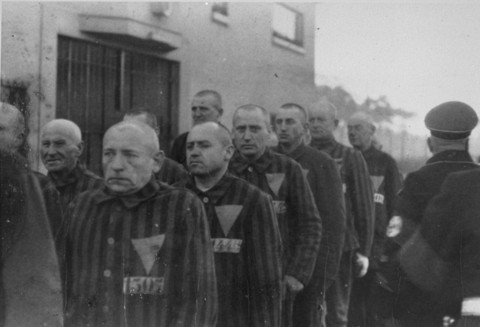
I know this is old news to some but I just had this story e-mailed to me. I have long feared that one of the next steps down the road was to identify someone in a visual manner as an RSFO. Now I found that in fact it is going on. It isn't enough that RFSOs names, photos and addresses are posted on the internet making them subject to harassment and other stigmas. Now when they are the lowest points in their lives and many have incurable illnesses when they go to the Mayo Clinic, they now have to wear an bracelet that will let everyone know their RFSO status. We are becoming a NAZI nation! If you read your history you will see that the Nazi's started identifying those they felt where undesirable with those who they considered to be sexual deviants. They forced them to wear Pink Triangles. I will have my shipment of Pink lapel pins in any day now. Please consider buying one and wearing it in protest. Tell the government they have gone to far. No matter where you stand on sex offenders this should not be tolerated. Once the government takes the rights away from any class of citizen it won't be long before they find others who they must protect the people from. Just like the Nazi's did in WWII, It started with sexual deviants, then political dissidents and finally ended with the Jews. Who will be the next group? Will it be you???
Also see post Pink triangles and Swastikas
October 13, 2008
Sex Offenders Required to Wear Blue Wristbands at Mayo Clinic
article here
Convicted sex offenders who are receiving care at the Mayo Clinic will now be required to wear blue wristbands in order to identify them. The rule also applies to other 'predatory offenders.' From Rochester Post-Bulletin:
Convicted sex and other predatory offenders getting care at Mayo Clinic now must wear blue wristbands as a way to identify them.
That's the newly revised policy implemented to inform employees of the offender's status, said Adam Brase, Mayo Clinic spokesman.
A year ago, state lawmakers added the health care facility notification requirement to the state's predatory offender registration law. Now, facilities are developing policies to comply.
"It's so new we are going along and feeling our way to make sure we are doing it right,'' said Rochester police Lt. Al Kuehl, who coordinates predatory offender notification for the department.
Kuehl told members of the Olmsted County Safety Council on Thursday that convicted predatory offenders who are required to register with law enforcement now also must notify health care facilities of their status when being admitted for treatment. That includes hospitals, nursing homes, residential, mental and chemical dependency treatment facilities licensed as health care facilities. The facilities then must make sure employees are aware of the offender's status. Except for hospitals, other licensed facilities must also notify other patients, or the patient's next of kin or emergency contact.
Mayo's policy requires a hospitalized predatory offender to wear a Mayo-provided blue wristband next to their ID wristband, so that employees who have contact with the patient will know he or she is a predatory offender, Brase said. Offenders will be housed in private rooms.
Kuehl predicts more changes next year as lawmakers debate changes that might be necessary under the Adam Walsh Child Protection & Safety Act passed by Congress. That establishes a comprehensive national system for the registration of sex offenders.
Predatory offenders, as defined in Minnesota, aren't just convicted sex offenders. They include some people convicted of first-degree murder, kidnapping, false imprisonment and soliciting minors to engage in prostitution.
Tuesday, June 30, 2009
Ron Book Show Rescheduled
Notice to any wanting to call in or listen to the interview that was supposed to air on ARC tonight with Ron Book. He has asked to move the interview to Thursday night. So the show will be on ARC Thursday, July 2nd at 8:30pm. Please join us to hear him excuse himself for being part of making RSFOs homeless in Miami. Hope to see a lot of us there.
http://www.talkshoe.com/tc/29521
Phone Number: (724) 444-7444
Call ID: 29521
http://www.talkshoe.com/tc/29521
Phone Number: (724) 444-7444
Call ID: 29521
Saturday, June 27, 2009
Why There Won't Be a "Sandra's Law"....And Why There Should Be
Article written by "Jonathon" Recently sent to me by Mary of RSOL Virginia. It's extremely well written and thought provoking. Posted with permission. THanks Jonathon and Mary.
Why There Won't Be a "Sandra's Law"....And Why There Should Be
The details of Sandra Cantu's murder are as horrible and heart-rending as anything we have seen. Sandra's fate was as terrible as that of Adam or Jessica, and yet you will not see the pundits or Sandra's family campaigning for the passage of Sandra's Law.
The problem is that the circumstances of Sandra's murder do not lend themselves to simple solutions, or to posturing on the part of self-proclaimed protectors of children. Sandra was not killed by a registered sex offender (the police are to be credited for not jumping to that conclusion). No registry would have prevented her death. The circumstances of Sandra's murder are far more the norm for such things than are the "stranger danger" scenarios used to justify the enactment of the AWA or Jessica's Law.
Sandra was killed by someone whom she and her family trusted. Statistics show that about half of all child abductions are by a parent, and about a quarter are perpetrated by a friend or close associate of the family. These are the abductions most likely to result in the death of the child.
I recently decided to try my hand at writing model legislation to replace the deeply flawed Adam Walsh Act. I haven't gotten very far. The first question I asked was what the best statistics on sex offender recidivism actually are. To that end, I visited the National Sex Offender Management web site where I found a number of studies attesting to the fact that sex offenses are under-reported, and that "many" sex offenders have committed additional offenses for which they were not caught.
Many of the studies concentrated on rape and child molestation as the offenses of choice. Rape, before the national sex hysteria, was almost universally recognized as a crime of violence. It's about the violence and the domination, not the sex. As such, I would expect it to have recidivism rates approaching those of violent crimes in general, namely 50-75%. Child molestation, may indicate true pedophilia on the part of the perpetrator. As this goes to the heart of how the person is wired sexually, one may assume it to be resistant to change. This doesn't mean that pedophilia cannot be treated or managed, or that all pedophiles reoffend. It simply means that one may expect this to be a tough nut to crack. In fact, Dr Fred Berlin, a nationally recognized expert on sex offenses and sexual trauma (a REAL one, not a John Walsh) has had remarkable success in treating high-risk sex offenders, including pedophiles. To the best of my knowledge (and I have an advanced degree in psychological counseling), shaming and ostracism are not valid therapeutic tools for ANY condition.
Many of the studies claimed that, when unreported crimes are taken into account, sex offender recidivism may rise to the level of 30-50%. The statement that "all sex offenses are under-reported" must be viewed in the context that ALL crimes are under reported. This includes drug dealing, drunk driving, burglary, you name it. When under-reporting is factored in, sex offenses rise to recidivism levels approaching the LOWER limits of the percentage range for crimes of all kinds. About two thirds of all drunk drivers, for example, re-offend. This means they are RE-ARRESTED or RE-CONVICTED. Shall we assume that they are caught every time they get behind the wheel with a snoot full? What would be the "actual" recidivism rate for drunk driving if under-reporting is factored in?
Recidivism and danger to the community cannot be looked at in a vacuum. They must be considered as they related to the entire spectrum of illegal activity. Do we assume, as the announcer intones on Law and Order SVU that "sexually related crimes are especially heinous?" Are they really more heinous than selling your kid crack? Than running over him with your car when you are intoxicated? Than assault? Than murder?
Because of a need to precisely define what is a sex offense for purposes of study, most legitimate studies appeared to stay away from such things as Internet offenses. The term "sex offense" actually encompasses a vast and highly heterogeneous universe which, like the real universe, continues to expand. This suggests that the actual management of sex offenses and sex offenders may be a rather complex undertaking, not the "one size fits all" approach used by the AWA and other legislation.
Society (that means politicians and the press) has decided that we need a huge and costly - and publicly accessible - sex offender management system. They have decided that everybody needs to be on the list. Even as studies in New York, New Jersey, and elsewhere have demonstrated that Megan's Law has done nothing for public safety, there are those who will continue to cry, "if it saves one child, it will be worth it." Well, it hasn't saved one child. It is, however, taking funds and personnel away from programs that DO save children, and DO make their lives better. Virginia, for example, is cutting back on education while it continues to expand the registry. As the registry grows, and as more people on it are declared "violent" by legislative whim, more state troopers are spending their time monitoring sex offenders, not on the highway where their presence actually saves lives. In an era when states are running out of funds and cutting back on essential services, the registry remains fully funded, even as many politicians now privately admit that it has become next to useless.
Sandra's Law should be the replacement for the Adam Walsh Act. Sandra's Law would be based on facts and science, not myth and politics. Sandra's law would follow the principle recommended by most real experts, namely watch some people smarter, not all people longer. Sandra's Law would actually enhance public safety while allowing those who truly want to rehabilitate and to rejoin society to do so. In all likelihood, the size of the registry under Sandra's Law would be greatly reduced, and public access limited. Under Sandra's Law, ALL funds saved through restructuring the sex offender management system would be channeled into programs directly benefiting children.
Sandra's death was a terrible tragedy, and absolutely nothing we can do will change that. She deserves a legacy, too. Can you think of a better one?
Subscribe to:
Posts (Atom)